A higher CD rate is only useful if the term fits your plans. Among the offers we checked on November 12, 2026, Sallie Mae Bank advertised 5.00% APY for a five-year CD, while Popular Direct offered 4.80% for 18 months. Both require you to commit cash for a set period, and an early withdrawal can erase part of your return. Sallie Mae rates · Popular Direct rates.
For someone saving for a purchase next year, a shorter CD may be a better fit than the highest rate on the page. This comparison highlights selected offers from three banks, including different opening deposits and maturities. It is a shortlist, not a claim that we surveyed every CD in the country.
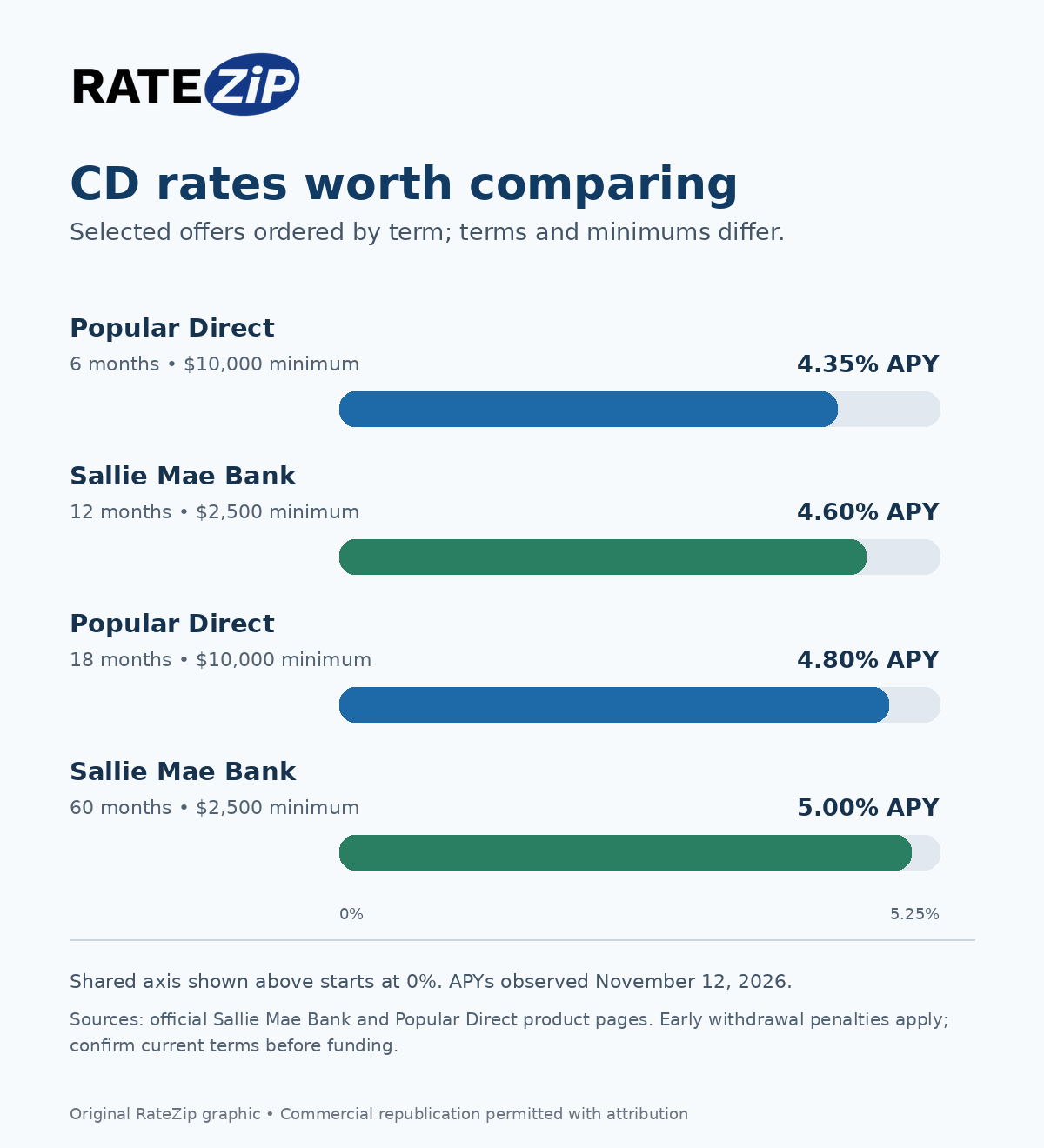
Graphic: RateZip. Selected offers, with different terms and minimum deposits. Sources: Sallie Mae Bank and Popular Direct. Early withdrawal penalties apply.
CD rates to compare this month
APY includes compounding and expresses the yield over a year. A six-month CD paying 4.35% APY does not pay 4.35% of your deposit in six months. The rates below were displayed when checked on November 12, 2026; confirm the current offer before funding an account.
Selected CDs, ordered by term; APYs checked November 12, 2026
| Term | Bank | APY | Opening minimum | Early withdrawal penalty |
|---|---|---|---|---|
| 6 months | Popular Direct | 4.35% | $10,000 | 120 days of simple interest |
| 12 months | Sallie Mae Bank | 4.60% | $2,500 | 90 days of simple interest |
| 12 months | Popular Direct | 4.60% | $10,000 | 270 days of simple interest |
| 12 months | Bask Bank | 4.50% | $1,000 | 90 days of interest |
| 18 months | Popular Direct | 4.80% | $10,000 | 270 days of simple interest |
| 24 months | Sallie Mae Bank | 4.70% | $2,500 | 180 days of simple interest |
| 36 months | Sallie Mae Bank | 4.75% | $2,500 | 180 days of simple interest |
| 60 months | Sallie Mae Bank | 5.00% | $2,500 | 180 days of simple interest |
Penalty summaries apply to the listed terms and are based on the amount withdrawn. A penalty may reach principal if accrued interest is insufficient. Read the full agreements before opening. Sources: Popular Direct, Sallie Mae, and Bask disclosures, page 17 (PDF page 22).
Which CD fits your savings plan?
Sallie Mae: several choices for money you can leave alone
Sallie Mae Bank, Member FDIC, has a $2,500 minimum across the featured terms. The one-year offer is worth comparing with its longer maturities: committing for several additional years buys a higher advertised yield, but also delays access to your money. Its five-year option has the highest APY among the CDs displayed here. Review the terms.
Popular Direct: a larger deposit and a penalty to examine
Popular Direct is the online deposit brand of Popular Bank, Member FDIC. It stands out in this shortlist at six and 18 months, with a $10,000 minimum. Its one-year CD ties Sallie Mae's APY, but the listed early withdrawal penalty is substantially longer. A saver who might need the money early should weigh that difference before choosing on rate alone. Review the terms.
Bask: a one-year option with a smaller opening deposit
Bask's $1,000 minimum makes its one-year CD accessible below the deposit needed for the two higher-yielding one-year offers above. You must fund the CD within 10 business days of opening. Bask is a division of Texas Capital Bank, Member FDIC, which matters when counting deposits for insurance coverage. Review the rates.
Look beyond the largest APY
Start with when you expect to need the cash. A fixed-rate CD can make the return more predictable, but the maturity date should come before the expense you are saving for. Money needed for a sudden repair or a gap in income is usually easier to access in a savings account, subject to that bank's transfer rules.
For a simple illustration, $10,000 earning 4.60% APY for one full year would earn about $460 before taxes, assuming the advertised yield applies for the entire year, interest remains in the account and there are no withdrawals or fees. A longer term is not automatically a better deal: it adds time during which you cannot freely move the money.
A CD ladder spreads money across different maturity dates. For example, a saver could divide an amount among six-, 12- and 18-month CDs, provided each opening minimum is met. That creates scheduled opportunities to withdraw or reinvest. Future rates are unknown, so a ladder manages timing rather than guaranteeing the highest possible return.
Are these deposits insured?
These offers are bank deposits. Standard FDIC coverage is $250,000 per depositor, per insured bank, for each ownership category. Savings accounts and CDs at the same bank generally share that limit within the same ownership category; different product names do not create separate coverage. Include accrued interest when assessing your total. FDIC deposit insurance guide.
What happens when a CD matures?
Check the maturity notice, the grace period and the renewal rate. A CD can renew automatically if you do nothing, and the new rate may differ from the original one. Putting a reminder on your calendar before maturity gives you time to compare the renewal offer with other choices.
How we selected these offers
RateZip checked official rate and disclosure pages for the three banks shown on November 12, 2026. We selected a range of terms and opening minimums, compared APYs within matching terms where possible, and included the corresponding early withdrawal penalties. We did not conduct a complete market survey or test customer service. Each account is offered through the bank's online channel and remains subject to the bank's application, funding and eligibility rules. This monthly edition excludes brokered CDs and offers whose current rate or terms we could not independently verify from an official source. Rates can change between editions; the bank's current disclosures control.
Need access sooner? Compare this month's high-yield savings shortlist. You can also browse CD offers on RateZip; the available partner offers may differ from the editorial selections above.
RateZip is operated by Peklava LLC, DBA RateZip, a licensed mortgage broker (NMLS ID 1592292). We are compensated by some of the partners shown, which may affect which offers appear and where. It does not affect our reporting or recommendations. See our editorial standards.